
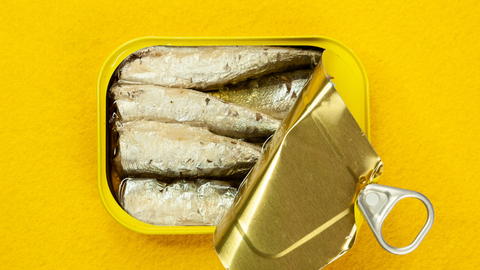
Louis Messier, our resident Each Peach history buff and tinned fish enthusiast, was a guest at the inaugural Celebrating Conservas class and gave us a pretty great overview of the important role tinned fish has had since its . Check out his recent
The origins of tinning
In 1795, the French military offered a prize of 12,000 francs for a new method of food preservation. The winner was French inventor Nicolas Appert who, in 1810, published his technique of thermal canning in which food sealed in glass bottles is externally heated. Only months later, the English merchant Peter Durand received the first patent for preserving food in tin cans. Fast forward a decade, Pierre-Joseph Colin, whose father had built upon Appert’s process by preserving sardines cooked in butter, perfected the technique by using olive oil instead. In 1824, Colin established the first sardine-in-oil canning factory in Nantes, France.
Sardines for Combat
The portability, convenience, and stability of tinned fish, especially sardines, made it incredibly useful for feeding soldiers and sailors. In 1855, the British Admiralty made its first purchase of French canned sardines preserved in oil to supply its fleet. Across the pond, the demand for tinned fish surged first during the American Civil War and then exploded during both World Wars, making it a familiar staple for soldiers across the globe and birthing the massive commercial canning industry in the United States. During the mid-20th century Monterey, California’s Cannery Row boasted as many as 30 sardine canneries each with their own colorful label.

The Importance of Iberia
We’d be remiss not to touch on the prominence of Portugal and Spain in the tapestry of tinned fish or conservas. Conservas Ramirez, founded by Sebastian Ramirez in 1853 and located in the southernmost tip of Portugal, is the world’s oldest fish canning company still in operation and is responsible for innovations such as the sardine-head decapitating machine and the easy-open can with a ring, both devised in the 1960s and 70s. Galician canneries in northwest Spain, where our friends at OlaBoa source their fish, are known for more premium catches such as tuna, mussels, and octopus packed in local olive oil and traditional sauces.
For these two nations with vibrant fishing and culinary cultures, sardines are both a source of national pride and an integral part of the economy. This key part of Iberian culture has recently come under threat, however, due to overfishing and declining sardine biomass. The situation was so dire that the Portuguese sardine fishery neared complete closure in 2017. Since then, governments, researchers, and members of the fishing industry have been collaborating to improve sustainability practices and reverse this decline, with the aim of ensuring that the Iberian sardine can be responsibly caught and enjoyed for generations to come.
Come check out our wide selection of tinned fish we have in store and keep an eye out for the next tinned fish class we have in the works.

Comments (0)
There are no comments for this article. Be the first one to leave a message!